播放记录
我们的罗伊:科恩哪儿去了高清海报 - 浮云影视_轻喜剧影视轻喜乐看免费看,韩剧轻喜剧 + 美剧喜剧片,动漫搞笑番剧,4K 蓝光,喜剧解析片单推荐免费在线观看
148
3.0

我们的罗伊:科恩哪儿去了

导演:

马特·蒂瑙尔

主演:

Roy M. Cohn,罗杰·斯通,芭芭拉·沃尔特斯

别名:

未知

影片信息

3.0

148人评分

英语

语言

未知

上映时间

97

片长

影片简介

  Roy Cohn personified the dark arts of American politics, turning empty vessels into dangerous demagogues - from Joseph McCarthy to his final project, Donald J. Trump. This thriller-like exposé connects the dots, revealing how a deeply troubled master manipulator shaped our current American nightmare.

播放列表

相关推荐

猜你喜欢
换一换

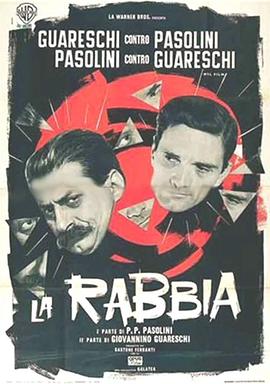
狂暴1963高清在线观看 - 浮云影视_轻喜剧影视轻喜乐看免费看,韩剧轻喜剧 + 美剧喜剧片,动漫搞笑番剧,4K 蓝光,喜剧解析片单推荐
567
9.0
DVD
狂暴1963

评分:9.0

更新时间:02月13日

主演:乔治·巴萨尼,Renato Guttuso,Gigi Artuso,Carlo Romano,夏尔·安德烈·约瑟夫·马里·戴高乐,德怀特·戴维·艾森豪威尔,尤里·加加林,艾娃·加德纳,尼基塔·赫鲁晓夫,列宁,索菲娅·罗兰,玛丽莲·梦露,教宗圣若望二十三世,保禄六世,教宗庇护十二世,菲利普亲王,伊丽莎白二世,苏加诺

简介:

  《狂暴 La Rabbia》使用了20世纪50年代的纪录片片段和相关评论,试图回答存在主义的问题:为什么我们的生活以不满、痛苦和恐惧为特征?这部电影分为两个完全独立的部分,这两个部分的导演,左翼的皮埃尔·保罗·帕索里尼和保守派的乔瓦尼·瓜雷希,为观众提供了对现代社会的对比分析和处方。第一部分,由帕索里尼,是一个谴责西方文化的罪行,特别是那些对殖民非洲的罪行。与此同时,它是一部关于前非洲殖民地解放和独立的编年史,把这些民族描绘成世界舞台上的新主角,把马克思主义作为他们的“救星”,并暗示他们“无辜的残暴”将成为这个时代的新宗教。相比之下,瓜雷斯基的角色则是对西方文明的捍卫,以及用传统基督教术语表达的对人类未来的希望。

阅读量:6696

年份:1963

狂暴1963

主演:乔治·巴萨尼,Renato Guttuso,Gigi Artuso,Carlo Romano,夏尔·安德烈·约瑟夫·马里·戴高乐,德怀特·戴维·艾森豪威尔,尤里·加加林,艾娃·加德纳,尼基塔·赫鲁晓夫,列宁,索菲娅·罗兰,玛丽莲·梦露,教宗圣若望二十三世,保禄六世,教宗庇护十二世,菲利普亲王,伊丽莎白二世,苏加诺

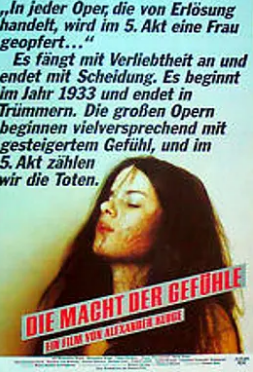
情感的力量高清在线观看 - 浮云影视_轻喜剧影视轻喜乐看免费看,韩剧轻喜剧 + 美剧喜剧片,动漫搞笑番剧,4K 蓝光,喜剧解析片单推荐
386
5.0
HD中字
情感的力量

评分:5.0

更新时间:02月09日

主演:Hannelore Hoger,Alexandra Kluge,Edgar M. Böhlke

简介:

  The Power of Emotion explains that emotion isn't to be confused with sentimentality. Emotion is ancient and more powerful than any art form. The film looks at young couples who run into difficulties as they try to translate their experiences of love into clear decision-making. A woman who has shot her husband provides a judge with a puzzle. Those who love can bring the dead back to life by means of co-operation. That's the focus of the opera, "The Power Plant of Emotions" and the "Opera of the 20th Century" cinema.
  Alexander Kluge: The Power of Feeling
  When I started working on The Power of Feeling, I was not in a rational state. I did not say, I have a subject and now I will make a film about it. Instead I was spellbound and observed in my direct surroundings, for example, how feelings move. I have not really dealt with the theme of my mother's death and the fact that she was the one who taught me "how feelings move." Nor have I dealt with how she died. That was an entire palette of feelings: "All feelings believe in a happy end," and everyone believes tacitly that they will live forever: The entire palette is somehow optimistic, a positive attitude towards life having been put on the agendaas long as she was young, as long as her body held out, from one day to the next she collapsed. She just suddenly collapsed, like in an opera where disaster takes the stage in the fifth act. It felt as if I had observed an air raid or a disaster.
  The film The Power of Feeling is not about feelings, but rather their organization: how they can be organized by chance, through outside factors, murder, destiny; how they are organized, how they encounter the fortune they are seeking.What is all this organization of feelings about? Generally feelings tend to be a dictatorship. It is a dictatorship of the moment. The strong feeling I am having right now suppresses the others. For thoughts this would not be the case. One thought attracts others like a magnet. People therefore need affirmation by other people to be sure about their own feelings (to counteract the acquisition of their feelings through outside forces). Through the interaction of many people, for example, in public, the various feelings also have a magnetic attraction to one another just like thoughts do. Feelings communicate through their manifestation in public.
  The cinema is the public seat of feelings in the 20th century. The organization is set up thusly: Even sad feelings have a happy outcome in the cinema. It is about finding comfort: In the 19th century the opera house was the home to feelings. An overwhelming majority of operas had a tragic end. You observed a victim.
  I am convinced that there is a more adventuresome combination: Feelings in both the opera and traditional cinema are powerless in the face of destiny's might. In the 20th century feelings barricaded themselves behind this comfort, in the 19th century they entrenched themselves in the validity of the lethal seriousness.

阅读量:4895

年份:1983

情感的力量

主演:Hannelore Hoger,Alexandra Kluge,Edgar M. Böhlke

我们的罗伊:科恩哪儿去了

扫一扫手机看
复制
首页
电影
连续剧
综艺
动漫
短剧
体育
资讯